
Emotional Numbness Test: 7 Honest Questions to Ask Yourself
A free emotional numbness test: seven honest questions to help you tell whether you're emotionally numb, and a gentle place to start. No score, no diagnosis.



On this page
An emotional numbness test is a simple self-check: a short set of honest questions that help you notice whether you feel muted, flat, or disconnected from your own emotions. Emotional numbness is the experience of being present in your life but not quite in it, where good news and hard news both seem to register at a distance. There is no clinical pass or fail for it. But you can usually tell when you read your own experience back honestly, and that is what the emotional numbness test below is for.
One important note before you start: this is not a diagnosis, and it is not medical advice. It is a mirror. The goal is to help you put language to something you have probably been carrying for a while without a name.
What does emotional numbness feel like?
Emotional numbness is easy to miss because it is defined by an absence. It is the feeling of not feeling, which is hard to notice from the inside. The most common signs of emotional numbness look like this:
- Things that should move you, like good news, a sad film, or a friend’s hard day, register but at a distance. You know how you would normally react. You just do not feel it.
- You are going through the motions. The day happens to you and you watch it from a little way back.
- You feel like you are behind glass, or a few feet behind your own eyes.
- You cannot tell anyone you are struggling, because nothing dramatic is wrong. You are just flat.
- Joy and pain have both quieted down. It is not sadness. It is more like the volume got turned to a low murmur.
Many people describe it as feeling like a ghost in their own life. If that phrase makes something in you go yes, that one, that flicker of recognition is itself worth paying attention to.
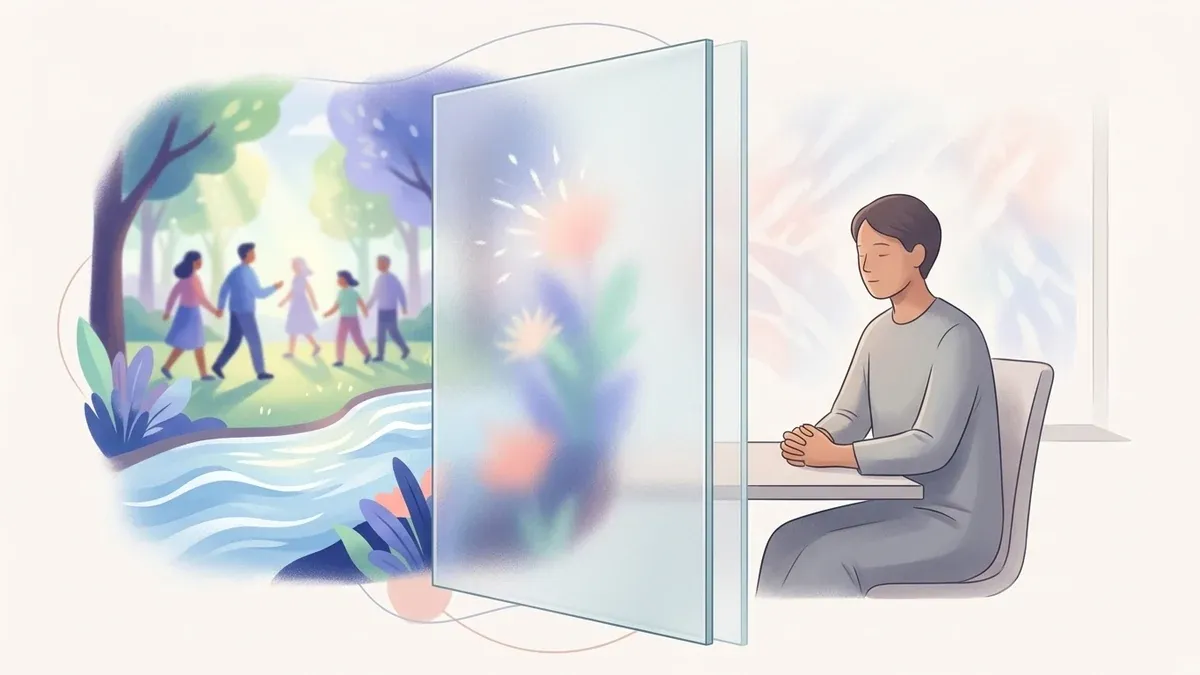
If you would rather watch than read, this short explainer walks through the everyday signs of emotional numbness, the quiet ones that are easy to dismiss as just being tired.
The emotional numbness test: 7 questions to ask yourself
Read each question slowly. You are not scoring points, and there is no number at the end. Some people search for an emotional numbness quiz that spits out a result, but a score cannot tell you what these questions can. The ones that make you wince or go quiet are the ones telling you something.
- When something good happens, do you reach for the feeling and find it muffled, as if you are performing the reaction you know you should have rather than living it?
- Can you remember the last time you felt genuinely moved, moved enough that it sat in your body and not just your head? If you have to search far back, notice that.
- Do you feel a step removed from the people closest to you, present in the room and going through the right motions, but watching from behind glass?
- Is the flatness fairly constant, there on the good days too and not only the hard ones, regardless of what is happening around you?
- Are you exhausted in a way that rest does not fix, and tired of how much energy it takes to seem fine?
- When you try to check in and ask yourself “what am I feeling right now,” does the answer come back blank, or “I don’t know,” more often than not?
- Do you describe it as “I’m just tired” or “I’m fine” because you do not have a better word, and because the real answer feels too vague or too dramatic to say out loud?
If a few of those questions sat heavily, this short self-test video covers a close cousin worth checking: whether the flatness is partly emotions you have learned to bottle up rather than feel.
How to read your results
There is no cutoff that “means” something here, which is exactly why this test has no score. Still, a simple way to read it: notice how many questions landed, and how hard.
If only one or two landed, and mostly on a rough week, you may just be tired or moving through a hard patch. If four or more landed, especially the constant, behind-glass ones in questions 3 and 4, what you are describing is very likely emotional numbness. Not a character flaw, and not you being dramatic. It is a real and common state, and naming it accurately is the part most people never get to do.
If you are still asking am I emotionally numb or is this just normal, that uncertainty is common too. Numbness rarely announces itself. It usually gets explained away as tiredness for months before it gets named.
Numbness is not the absence of feeling. It is your nervous system turning the volume down to protect you, and a turned-down volume can always be turned back up.
Emotional numbness test vs. depression: how to tell the difference
This is worth separating out, partly because a lot of people quietly reject the depression label and then assume there is nothing else to call what they feel.
Depression usually carries a weight: heaviness, sadness, sometimes hopelessness. Emotional numbness is more of a quietness. Not heavy, just muted. The lights are not off, they are on a dimmer. The two can overlap, and only a professional can sort that out for you. But if you have read about depression and thought that is not quite it, the sadness part does not fit, numbness might be the closer word, and it points somewhere a little different.
Often, numbness is the body’s way of turning the volume down after it has been bracing or overwhelmed for a long time. When feeling everything gets to be too much, the system mutes the whole channel, the hard feelings and the good ones together. It is protective. It also tends to outstay the thing it was protecting you from. If that resonates, the wider picture of how this state forms is worth reading in emotional numbness.
Am I emotionally numb, or just tired and burnt out?
Burnout and numbness travel together, so the honest answer is often “both.” The useful distinction: burnout is mostly about depletion, the sense that the tank is empty and the demands keep coming. Numbness is about muted signal, where even rest and good news do not quite land. You can be rested and still numb. That is the tell.
There is also a close cousin worth knowing about: when capability stays high but starting anything feels impossible and oddly flat, that overlaps with a quiet shutdown state we cover in functional freeze. If the questions above landed but “frozen” fits better than “muted,” that guide may name it more precisely.
What to do if you’re emotionally numb
Two things, gently.
First, stop reading it as proof that something is wrong with you. Numbness is a state your nervous system entered for a reason, usually a sensible, self-protective one. It is not who you are, and states change.
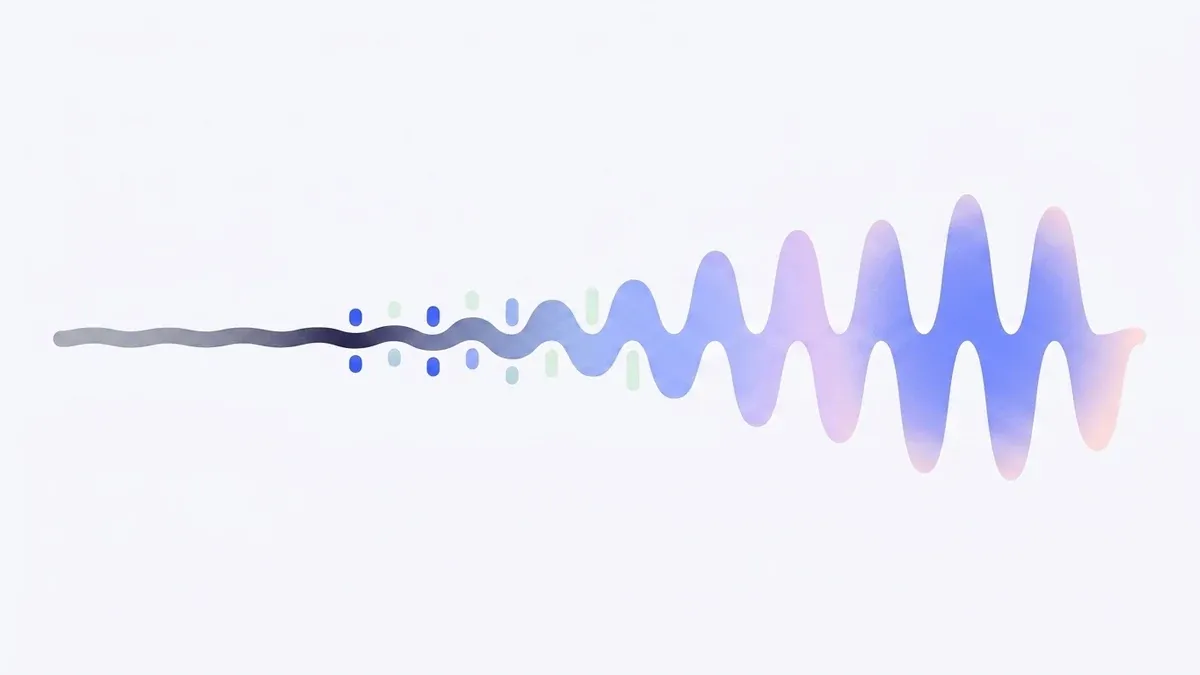
Second, do not try to feel everything again all at once. The instinct is to force a big breakthrough, to make yourself cry or do the intense thing and blast back to life. A muted system reads “big” as “too much” and mutes harder. What actually brings feeling back is the opposite: small, repeated signals that it is safe to come back online. A bit of warmth. A few slow breaths. Naming one small thing you can feel, even if it is just the chair under you. Done daily, those tiny reps slowly turn the volume back up, far more reliably than any single dramatic attempt.
Where to go from here
This page cannot tell you exactly where you are. Only you, sitting with those questions honestly, can start to. But you do not have to figure out the next step alone.
If a lot of this landed and you want a clearer read plus a small place to start, the two-minute quiz picks up where this self-check leaves off. It reads where you actually are and builds a starting point small enough to manage on a flat day. There is more to sit with on the blog too, if you would rather keep reading first.
Feeling muted is not a sign you are broken. It is usually a sign you have been managing something hard for a long time. The volume can come back up, slowly, and from where you are right now.
Sources
- Plantinga, K.. (n.d.). Emotionally numb test. Best Therapists.
- wikiHow. (n.d.). Emotional numbness test. wikiHow.
- Psych2Go. (n.d.). 8 signs you're emotionally numb [Video]. YouTube.
- Psych2Go. (n.d.). Quiz: are you bottling up your emotions? (self test) [Video]. YouTube.
Tuun is a wellbeing product, not medical care. If you are in crisis, please contact 988 (US/Canada), Samaritans 116 123 (UK & IE), Lifeline 13 11 14 (AU), or your local emergency services. See our full wellness disclaimer.