
What a nervous system reset actually is (and what it isn't)
A nervous system reset isn't a 30-second viral trick. It's small signals, repeated daily, that move your body out of a stuck state and back toward steady.



On this page
A nervous system reset is the process of shifting your body out of a stuck stress state, wired, frozen, or flat, and back toward a calmer baseline where you can think, feel, and start things again. It isn’t a single magic exercise, and it doesn’t happen in one session. It’s a handful of small, repeatable signals that tell your body the threat has passed, done often enough that the calmer state starts to hold.
That is the honest version. The internet’s version, “reset your nervous system in 30 seconds,” isn’t wrong about the moves, exactly. It’s wrong about the timeline. A breath or a cold splash can settle you in the moment. Changing the setting your whole system runs on takes more than a moment, and it’s worth knowing that going in, so you don’t conclude it failed when one trick doesn’t fix everything.
What does a nervous system reset actually do?
Your nervous system is always quietly scanning: am I safe, or do I need to brace? When it decides “brace,” it shifts your body into a stress state, heart up, muscles tight, attention narrow. When it decides “safe,” it lets you settle. That is all working as designed.
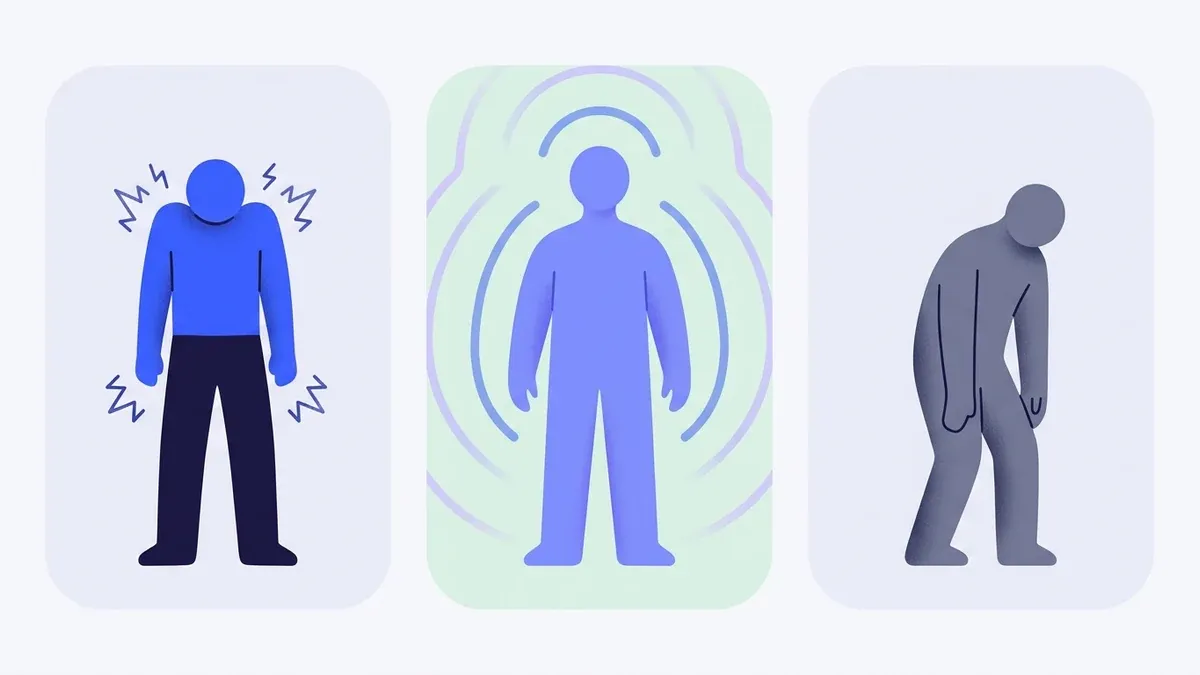
The problem is when the scan gets stuck on “brace.” After a long stretch of stress, months or years, the system can stop coming back down on its own. You end up living in some version of stuck:
- Wired. Restless, on edge, can’t switch off, mind racing at 1am.
- Frozen. Capable on the surface but unable to start the things you care about, oddly numb.
- Flat. Going through the motions, watching your own life from a little way back.
A reset isn’t about forcing calm on top of that. It’s about sending your body the signals it has been missing, the ones that say the emergency is over, so it can let go of the brace it has been holding. You are not overriding your nervous system. You are giving it permission, and a reason, to settle.
A lot of this works through the vagus nerve, the body’s main “stand down” pathway, which is why so many reset techniques are really just ways of sending it the right signal.
A vagus nerve reset uses techniques that soothe your vagus nerve so your body can naturally shift out of fight-or-flight mode, so you can relax, heal and recover.
What are the signs your nervous system needs a reset?
You probably already know. But if you want it named:
- You are tired in a way that sleep doesn’t fix.
- Small things, a text, a changed plan, a noise, land much harder than they should.
- You can’t tell whether you are anxious or numb, because it keeps switching.
- You sit down to do something you care about and just can’t begin.
- Your shoulders, jaw, or stomach are tight and you don’t remember them ever loosening.
- Rest doesn’t feel restful. Even on a free afternoon, you are braced.
If most of that lands, your system isn’t broken. It has been doing its job for too long without a break, and it is asking for the off-ramp. This is the same stuck state we cover from the freeze side in functional freeze, and the flat, muffled version of it in emotional numbness.
How do you reset your nervous system?
Here is what actually moves the needle, and it is quieter than the viral stuff suggests. Think of these as nervous system reset techniques you repeat, not tricks you perform once.
Go smaller than feels worth it. A stuck nervous system reads “big” as “more threat.” A reset week, an intense new routine, a cold plunge you dread, those can backfire. The moves that land are almost embarrassingly small: three slow exhales, a hand on your chest, feeling your feet on the floor, unclenching your jaw on purpose. Small enough that your body accepts them instead of bracing against them.
Lead with the body, then the behaviour. The stuck state lives below words, so the first move is physical. The action you have been avoiding gets easier to approach after the body has come down a notch, not before. Trying to push the behaviour first is why willpower keeps failing you here. There is more on this in nervous system regulation.
Make it daily, not heroic. This is the part the 30-second-trick framing skips. One small move every day will reset your baseline far more than one big effort once in a while. You are slowly retraining a system, and systems learn through repetition. The dailiness is doing the real work.
Aim for “a little steadier,” not “fixed.” A single reset move won’t dissolve years of stress, and expecting it to is a setup for disappointment. What you are after is a floor that slowly rises: flat days a bit less flat, a quicker return to calm after something throws you.
Most of these moves are somatic exercises: small, body-first signals of safety. If you would rather be guided than read, this short routine is a gentle place to practice the kind of slow, body-based reset described here.
Why “reset” is the wrong word
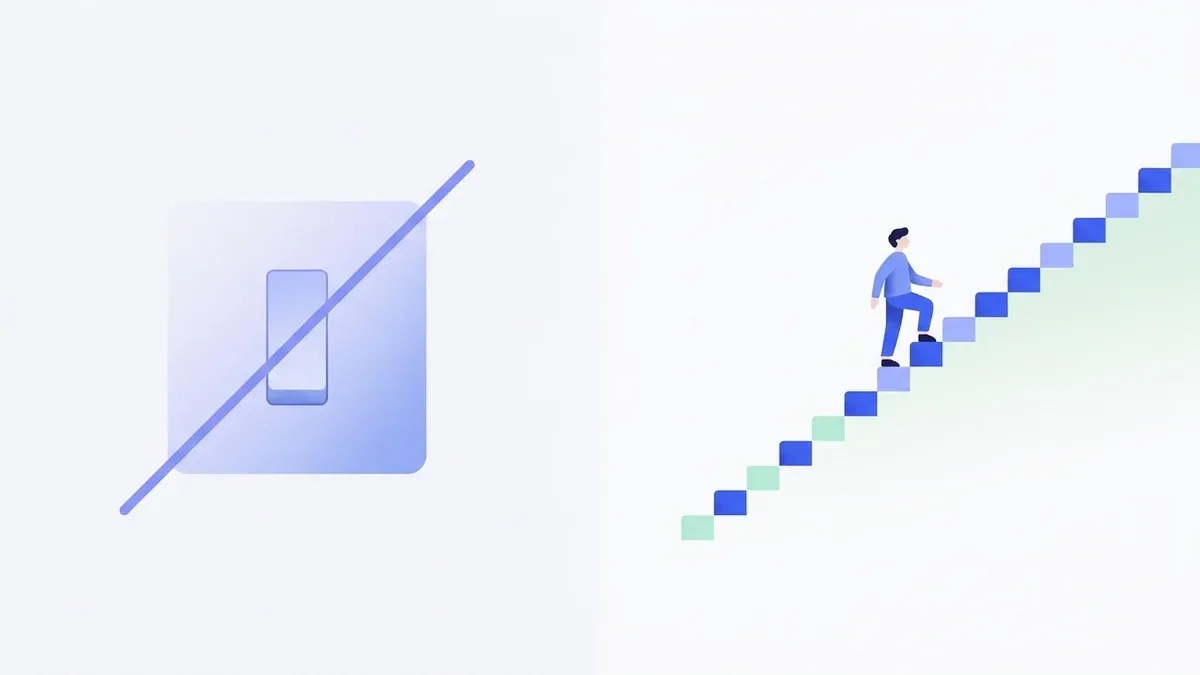
The word reset is useful for searching and misleading for healing. It sounds like a button, a clean reboot, one decisive action that puts everything back to factory settings. That is not how a nervous system works. There is no switch.
What actually changes a baseline is repetition: small, repeated signals of safety that gradually teach the system it can stand down. It is less like flipping a light and more like climbing a gentle staircase, one small step at a time, where the height you gain is built from the steps, not from a single leap.
This is also why bigger interventions, the retreat, the overhaul, the dramatic detox, so often don’t hold. They feel like a lot while you are doing them and then leave nothing behind, because the change wasn’t built in a format your nervous system can keep. Small and daily is unglamorous. It is also what works.
How long does a nervous system reset take?
In the moment, seconds: a few slow exhales can take the edge off an acute spike. Shifting the baseline you live on is the longer project, usually weeks to months of small daily reps rather than a single session. The timeline depends on how long you have been stuck and how consistent the small signals are. The useful expectation is not “fixed by Friday” but “a little steadier each week,” with the occasional hard day that drops you back. Coming back faster each time is the actual progress.
This take on building a small daily reset into your routine, rather than chasing a one-time fix, is a good companion to everything above.
Why doesn’t “just relax” work?
Because the part of you that runs the stress response doesn’t take verbal instructions. You can fully understand that you are safe now and stay braced anyway. That is not you failing to try, it is how the system is built. It responds to signals, not arguments: slow exhales, warmth, weight, something steady to look at, a softening jaw. That is why the way out is physical and small, repeated over time, rather than a decision you make once.
Where to start
You don’t need to reset everything today. You need one small move your body can take right now, and then the same kind of move tomorrow. That is the whole mechanism. It looks too simple to work, which is precisely why it gets skipped.
If you would like a starting point chosen for you, calibrated to whether you are running wired, frozen, or flat, the two-minute quiz reads where you are and builds a plan from there. Small enough to do on the days you can’t do much, daily enough to actually shift the setting. There is more to read on the blog too.
Your nervous system isn’t working against you. It has been waiting for a signal it can trust. You get to start sending it.
Sources
- Estemalik, E. (Cleveland Clinic). (n.d.). How to reset your vagus nerve naturally. Cleveland Clinic Health Essentials.
- Neff, M. A.. (n.d.). 13 effective ways to reset your nervous system and regulate well-being. Neurodivergent Insights.
- Learn Somatics. (n.d.). 5 minute nervous system reset that actually works [Video]. YouTube.
- Robbins, M.. (n.d.). Nervous system reset: do this every day to rewire your brain from stress and anxiety [Video]. YouTube.
Tuun is a wellbeing product, not medical care. If you are in crisis, please contact 988 (US/Canada), Samaritans 116 123 (UK & IE), Lifeline 13 11 14 (AU), or your local emergency services. See our full wellness disclaimer.